For years, I felt powerless as I watched healthy people, of all ages, take a hit on their vitality because they didn’t understand how their bladder worked— or that it could be a tool for optimizing health. I left so I could help change the narrative.

“When we tune in and let our bladder patterns emerge, they truly cut through the noise— you can’t miss them!”
My Why
The bladder is filled with information and sends daily messages. How many organs can make you stop a conversation or leave a meeting on a regular basis? Much of this information is normal signaling about your metabolism, nervous system and nutrition. However, because the bladder is gender, age and pregnancy coded, there is a long runway before people have what I call a “permission slip” to discuss bladder health or even just be curious about it.
Bladder and urinary health begins when we are born. Arguably this organ system isn’t hard to read and one of the richest sources of information. But we get minimal education on this part of our health, and as a result it’s filed as a tomorrow problem for future us to sort out. Because urology is a surgical specialty and nephrology is a medical specialty for people with kidney disease, that leaves MOST of us on our own.
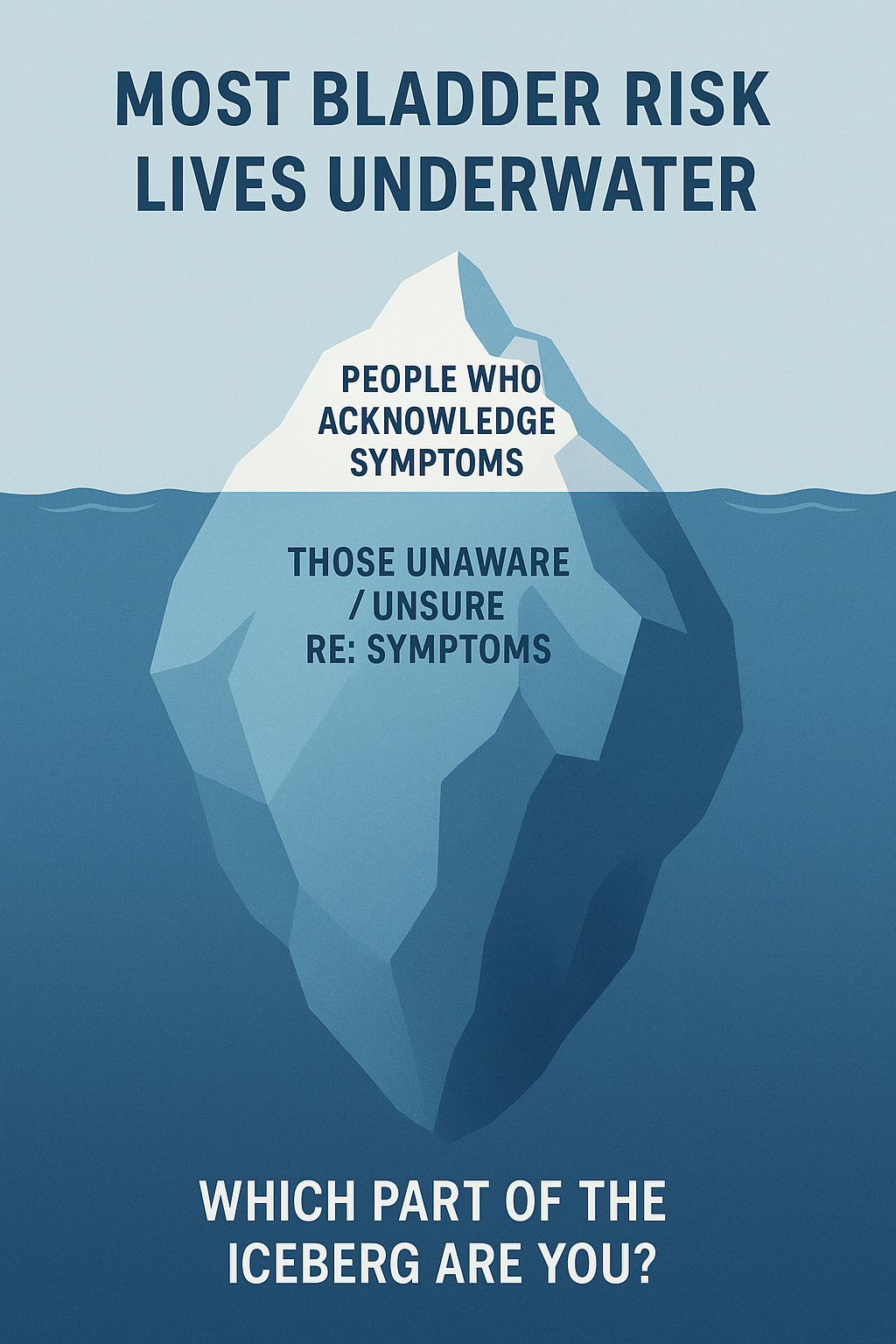
This feeds a problematic misconception— that a bladder is either a problem that needs “fixing” with surgery or just fine.
The truth is most of us live in the middle with normal bladder beats—functional fluctuations related to stress, diet, periods or caffeine. Awareness about how the bladder operates is a game changer for optimizing sleep, whole body health and nutrition. Yes, it can also give you early clues to something being wrong. But it’s power lies in it’s ordinary daily functioning as it carries urine from point A (kidneys) to point B (bladder emptying). This is where ordinary people of all ages can thrive.
I don't think of bladder biometrics (BB) as something you do forever. You're not meant to measure every day for the rest of your life. You do it, you learn your normal, and put it down — then maybe you repeat it once a year, the way I do as the owner of a type 2 bladder. It's a check-in to get context, not a leash. In that way, it’s similar to continuous glucose monitoring for non-diabetic individuals. Thinking like this is full circle for me. I'm a blue-zone kid; longevity and prevention are part of my fabric.
What I love is the interaction — reading your own data, sitting with it, getting curious. If you already watch your glucose or your HRV, BB slots right in and can start a conversation between your numbers. Bladder intel is for everyone—not just people who are sick or need surgery. It's for anyone who wants to optimize or just be overall healthier.
How This is in My DNA

In addition to what bladder biometrics offers generally healthy people, over the years I’ve also seen it help people with type 3 bladders (the ones with some issues). Because it can identify their root causes. By using their own bladder data, some could avoid procedures. Often, it was more helpful than advanced bladder testing.
This is why I wanted I created the bladder biometrics method—because all people deserve this knowledge. And they deserve it long before they have “issues.”